

- Rapid Market Expansion: The RCM market is projected to reach $656.7 billion by 2030, driven by scalable, secure cloud platforms.
- End-to-End Workflow: Cloud RCM automates patient registration, insurance verification, claim scrubbing, denial management, and patient billing.
- EHR Interoperability: Seamless connection between clinical records and billing software eliminates manual data entry errors.
- Denial Prevention: AI-powered scrubbers prevent over 85% of claim denials before submissions leave your practice.
- 1. What is Cloud-Based Revenue Cycle Management?
- 2. The Need for Cloud-Based RCM Solutions
- 3. How AI & Automation Powers Cloud RCM
- 4. Interactive Cloud RCM & Practice Savings Calculator
- 5. Challenges in Adopting Cloud RCM Systems
- 6. Why Partner with Shoreline Medical Billing Company?
- 7. Frequently Asked Questions
The revenue cycle management market is booming at the rate of 11.29% CAGR with a jump from $384.63 billion in 2025 to $656.7 billion by 2030. (Data Source: Grand View Research). This rapid growth is fuelled by the adoption of cloud-based RCM tools and AI-powered solutions that are smart, scalable and secure designed to process claims, reduce denials and speed up payments improving the overall financial health of the organizations. In this blog, we’ll explore how cloud-based RCM solutions work, what are their significance, and how they help hospitals, clinics, and physicians at every stage of their revenue cycle from claims submissions to payment collections.
What do you mean by Cloud-Based Revenue Cycle Management?
Cloud-based RCM systems are online platforms that manages the entire process of revenue cycle from patient registration to final payment over the internet ("the cloud"). So that the data can be accessed from anywhere via a secure network connection. They provide a complete, end-to-end revenue cycle management system that is highly efficient and secure for handling everything from start to finish.
Patient Registration & Scheduling
Can get accurate patient information with the help of virtual assistants.
Insurance Verification
Automatically verifies patient's eligibility and benefits in real-time.
Medical Billing & Coding
Assign latest codes and modifiers as per ICD-10 guidelines.
Claims Management
Scrubs the claims before submission for errors and electronically submits and tracks them until they're paid.
Denial Management
Identifies denial patterns and flags them to prevent future occurrence.
Patient Billing & Collections
Sends clear statements to patients, making it easy for them to pay.
Reporting & Analytics
Gives a clear picture of the organization’s financial performance.
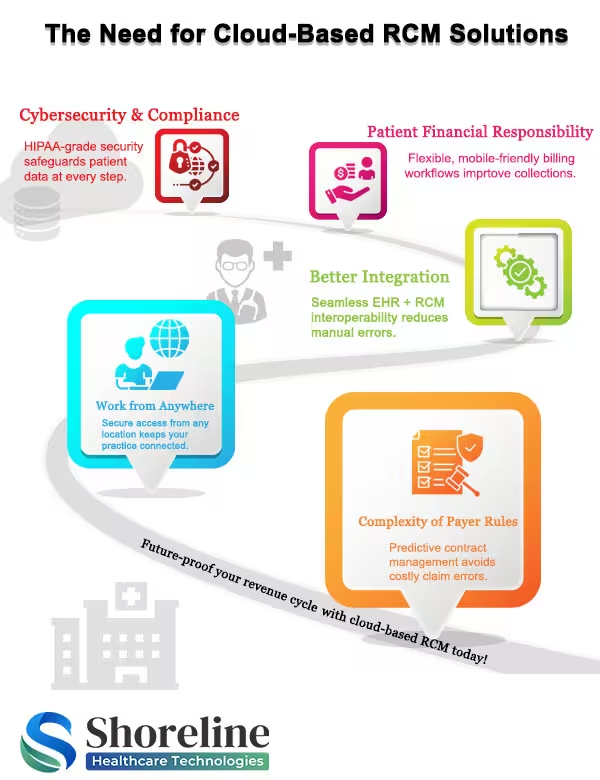
The need for Cloud-Based RCM Solutions
The revenue cycle is more than billing; it's a strategic engine for financial survival. Let’s break down the reasons cloud RCM systems are essential today:
Complexity of Payer Rules
Every payer has unique contract terms. Cloud RCM tools use predictive contract management and real-time rules interpretation to prevent costly errors.
Work from Anywhere
Providers can securely access the RCM platform from anywhere with a secure internet connection. This is crucial for practices with multiple locations or remote staff.
Better Integration
Cloud systems are built for interoperability in RCM. They easily connect with Electronic Health Record (EHR) and other software, creating a seamless flow of information. This cloud EHR and RCM integration is key to reducing manual data entry and errors.
Patient Financial Responsibility
Patients now account for over 30% of healthcare revenue. Patient billing and collections software in cloud RCM enables flexible payment workflows and mobile options.
Cybersecurity & Compliance
Cloud vendors have the latest features and abide with all states-specific and federal regulations like HIPAA, CMS etc. It handles the PHI (Protected Health Information) securely with multiple layers of security, encryption, and backups.
How does AI and Automation helps cloud-based RCM?
Artificial intelligence (AI) and Automation are the driving forces behind the cloud-based RCM software. They help in handling the repetitive, rule-based tasks, and provides the intelligence to manage and predict possible outcomes. They work together to improve workflows, reduce manual error, and makes the revenue cycle faster, smarter, and more profitable.
Key Features of AI-Powered RCM Tools
Prior Authorization Automation
Manually getting pre-approval from insurers is a major bottleneck. AI can automatically check requirements, submit requests, and track their status, freeing up hours of staff time.
Automates Claim Management
They automatically scrub claims for errors before they're submitted. And checks for common mistakes
in medical codes, patient information, or formatting, thereby reducing the chance of a denial.
We at Shoreline Medical Billing company use the industry’s best and updated electronic scrubber
which can prevent over 85% of claim denials.
Real-Time Claim Denial Management
Whenever a claim is denied, AI doesn't just flag it but also analyze and find out why it was denied. It can then suggest the fastest way to fix it or even automate the appeal process. This proactive approach turns denial prevention and management from a reactive chore into a strategic advantage.
Predictive Analytics in RCM
They can analyze the past data and predict future trends. This helps to address potential problems before they happen.
Intelligent Patient Billing
AI can personalize the patient billing experience. It creates easy-to-understand statements and offer flexible payment plans based on a patient's history. This improves the patient experience and increases the payment collection.
Challenges in Adopting Cloud RCM Systems
Adopting to a cloud-based environment involves several challenges like:
- Risks in Data Migration: Moving the huge volume of patient data to the cloud can be complex and time-consuming and needs careful planning.
- Intense Training: Staff must be trained continuously to stay updated and use the advanced features.
- Cyber Threats: Eventhough the Cloud platform is safe and secure; breaches can still occur due to internal errors.
- Vendor Dependency: Choosing a reliable partner is critical.
- Need for a reliable Internet: Working on cloud-based RCM solutions might require a reliable, high speed network connections.
Why Partner with Shoreline Medical Billing company?
Shoreline Medical Billing company stands out as a leader in implementing end-to-end revenue cycle management services, our cloud-based RCM tools combined with AI-powered automation helps in faster claim submission, we provide financial analytics for providers to track their KPIs. Our commitment to interoperability in RCM ensures smooth EHR integration with less downtime and provides a HIPAA complaint safe environment for all billing needs from patient registration till payment posting. By partnering with us providers are benefited with quicker reimbursements and reduced denial rates helping them to build a stronger relationship with patients.
Modernize Your Practice with Cloud RCM Excellence
Cut denials, streamline EHR integration, and accelerate reimbursements. Schedule your complimentary billing assessment with Shoreline today.