

-
Telehealth Compliance: Unlock telehealth potential with cloud computing.
-
Us Healthcare Is Embracing Cloud: Implementing structured protocols for us healthcare is embracing cloud directly mitigates documentation discrepancies and streamlines claim submission.
-
Key Benefits Of Cloud Technology: Targeting operational vulnerabilities in key benefits of cloud technology protects practice cash flow and elevates first-pass claim acceptance rates.
-
Revenue Cycle Acceleration: Partnering with specialized RCM billing experts eliminates administrative backlog, shortens payment cycles, and safeguards practice revenue.
With virtual care and remote monitoring on the rise, those old-school on-site IT setups just can't keep up anymore. There is an urgent need for a flexible, strong foundation that handles huge amounts of patient info instantly and safely. Cloud computing provides you with this platform to conduct virtual visits, instantly access EHRs, and process claims without geographical or hardware limitations.
Providers can deliver remote services with ease by moving medical records, billing tools, and patient details to the cloud and stay compliant with HIPAA, refine their RCM processes, and cut down on their overhead. Switching to the cloud lets you conduct smooth online appointments, delight patients with better experiences, and keep your revenue flowing steadily. In this guide, let us examine how cloud computing is revolutionizing telehealth and making it more accessible, secure, and cost-effective.
1. Why US Healthcare is Embracing Cloud-Based Telehealth
The shift toward telehealth in the United States accelerated sharply after 2020. The Centers for Medicare & Medicaid Services (CMS) reported that Medicare telehealth visits increased from approximately 13,000 per week pre-pandemic to over 1.7 million per week at peak adoption. However, this surge immediately exposed severe limitations in legacy on-premise client-server infrastructure:
Legacy Server Bottlenecks
Local servers suffer from bandwidth bottlenecks, hardware maintenance outages, and latency issues when managing simultaneous high-definition video streams and EHR updates.
Scalable Cloud Elasticity
Cloud platforms like AWS, Microsoft Azure, and Google Cloud offer elastic autoscaling, instantly allocating compute power as patient appointment loads fluctuate throughout the day.
2. Key Benefits of Cloud Technology in Telehealth
Migrating telehealth operations to secure cloud platforms delivers tangible clinical, financial, and operational improvements for medical practices of all sizes:
Universal Remote Access
Physicians and billing teams securely access patient files, imaging, and encounter documentation from any authorized endpoint or home office without latency.
Reduced Capital Overhead
Eliminates expensive on-site server hardware, routine tape backups, and round-the-clock IT facilities maintenance, converting capital expenses into predictable operating budgets.
Interoperability & API Sync
FHIR and HL7-compliant REST APIs enable smooth real-time data synchronization between virtual visit software, practice management systems, and clearinghouses.
3. HIPAA Compliance and Cloud Security in Healthcare
Security and patient privacy remain paramount when managing electronic Protected Health Information (ePHI) across remote networks. A 2024 IBM Security report revealed that the average cost of a healthcare data breach reached $10.22 million—higher than any other industry. Leading healthcare cloud providers implement rigorous defensive layers to ensure total regulatory adherence:
Average cost of a healthcare data breach in 2024 (IBM Cost of a Data Breach Report). Robust cloud infrastructure with zero-trust encryption and automated audit logs protects practices from catastrophic non-compliance fines.
- End-to-End Encryption: Enforce AES-256 data encryption at rest and TLS 1.3 protocol encryption for all data in transit across patient sessions.
- Business Associate Agreements (BAAs): Ensure all cloud infrastructure hosts, video software vendors, and clearinghouse partners have signed legally binding BAAs.
- Role-Based Access Control (RBAC): Limit clinical and billing staff access strictly to the data tiers required for their specific job functions, backed by Multi-Factor Authentication (MFA).
- Automated Audit Trails: Record immutable timestamps and user identity logs for every single ePHI creation, edit, download, and transmission event.
4. CMS and Other Regulatory Considerations
Navigating telehealth reimbursement rules requires strict adherence to evolving Medicare, Medicaid, and commercial payer guidelines. The expiration of specific public health emergency waivers means billing departments must ensure cloud tools correctly capture:
Place of Service (POS) Codes
Accurate distinction between POS 02 (Telehealth Provided Other than in Patient's Home) and POS 10 (Telehealth Provided in Patient's Home) to prevent immediate claims rejections.
Telehealth Specific Modifiers
Proper attachment of modifiers such as Modifier 95 (Synchronous telemedicine service), Modifier GT, and Modifier GQ based on payer-specific contract stipulations.
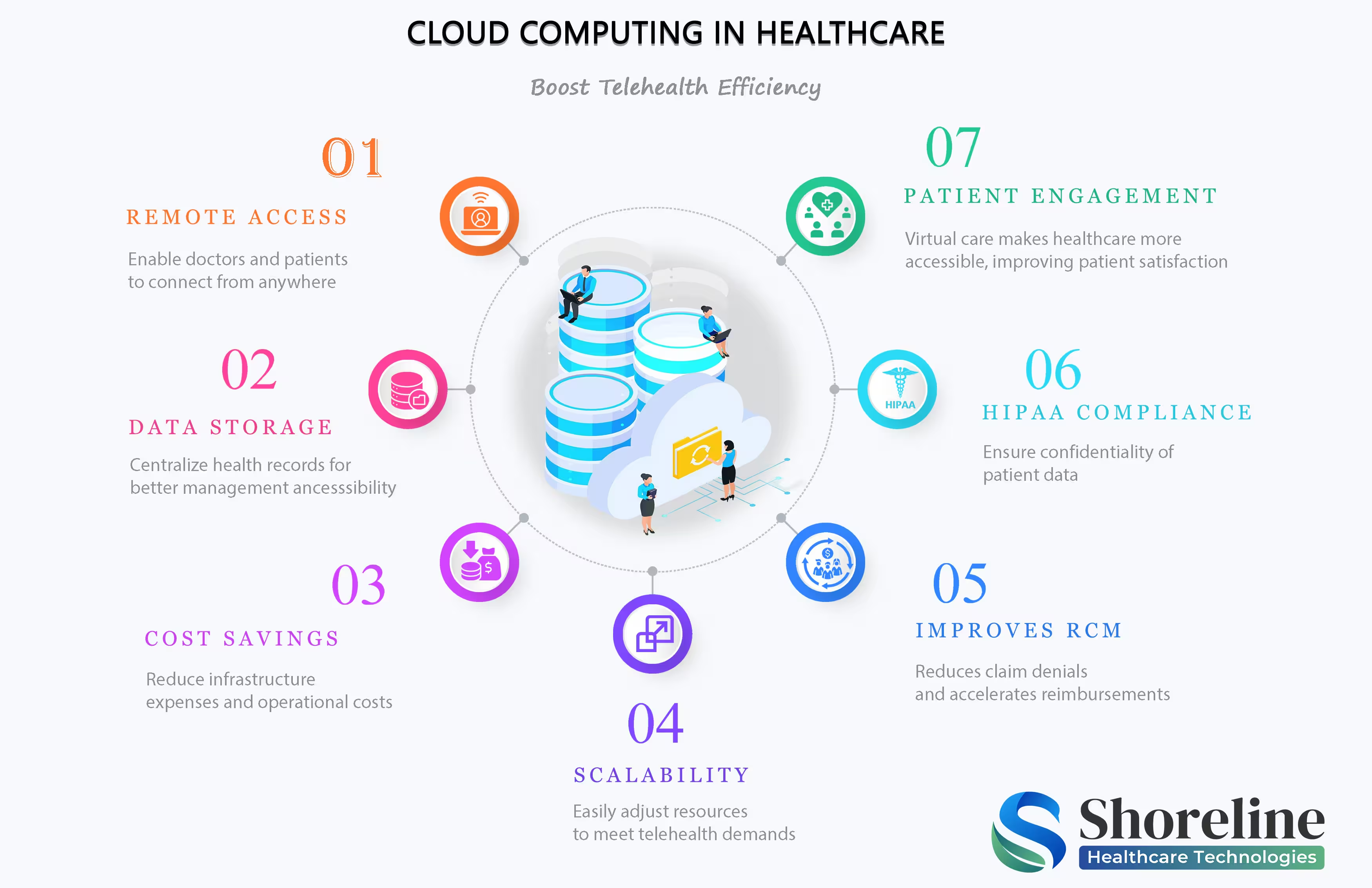
Key Elements of Cloud Computing in Healthcare & Telehealth
Overview of cloud security, scalability, digital workflows, and telehealth billing integration.
5. Best Practices for Cloud-Enabled Telehealth Billing
To maximize cash flow and minimize denial rates, medical practices should leverage cloud capabilities to automate front-end and back-end revenue cycle workflows:
Real-Time Eligibility
Cloud-connected clearinghouses automatically verify active coverage, telehealth benefits, copays, and deductible limits before the virtual visit begins.
Automated Claim Scrubbing
Scrub encounters against National Correct Coding Initiative (NCCI) edits and payer-specific telehealth modifier rules prior to electronic 837 batch generation.
Cloud Analytics Dashboards
Monitor key revenue cycle performance indicators in real time, including first-pass claim acceptance, days in accounts receivable (A/R), and denial patterns.
6. Transitioning to the Cloud with Shoreline
At Shoreline Medical Billing company, we help healthcare practices make a frictionless transition to high-efficiency, cloud-based billing environments. Our comprehensive RCM solutions include cloud EHR data migration support, customized telehealth claim scrubbing, automated eligibility verification, and rigorous compliance checks.
Whether you are a solo practitioner expanding into virtual care or a multi-specialty healthcare network managing thousands of monthly encounters, our certified specialists tailor billing workflows to optimize your telehealth offerings. By deploying cloud-integrated billing tools and proactive denial tracking, we have consistently helped our medical practice clients reduce telehealth claim denial rates by 20% to 30%, converting delayed receivables into steady, dependable revenue.