
-
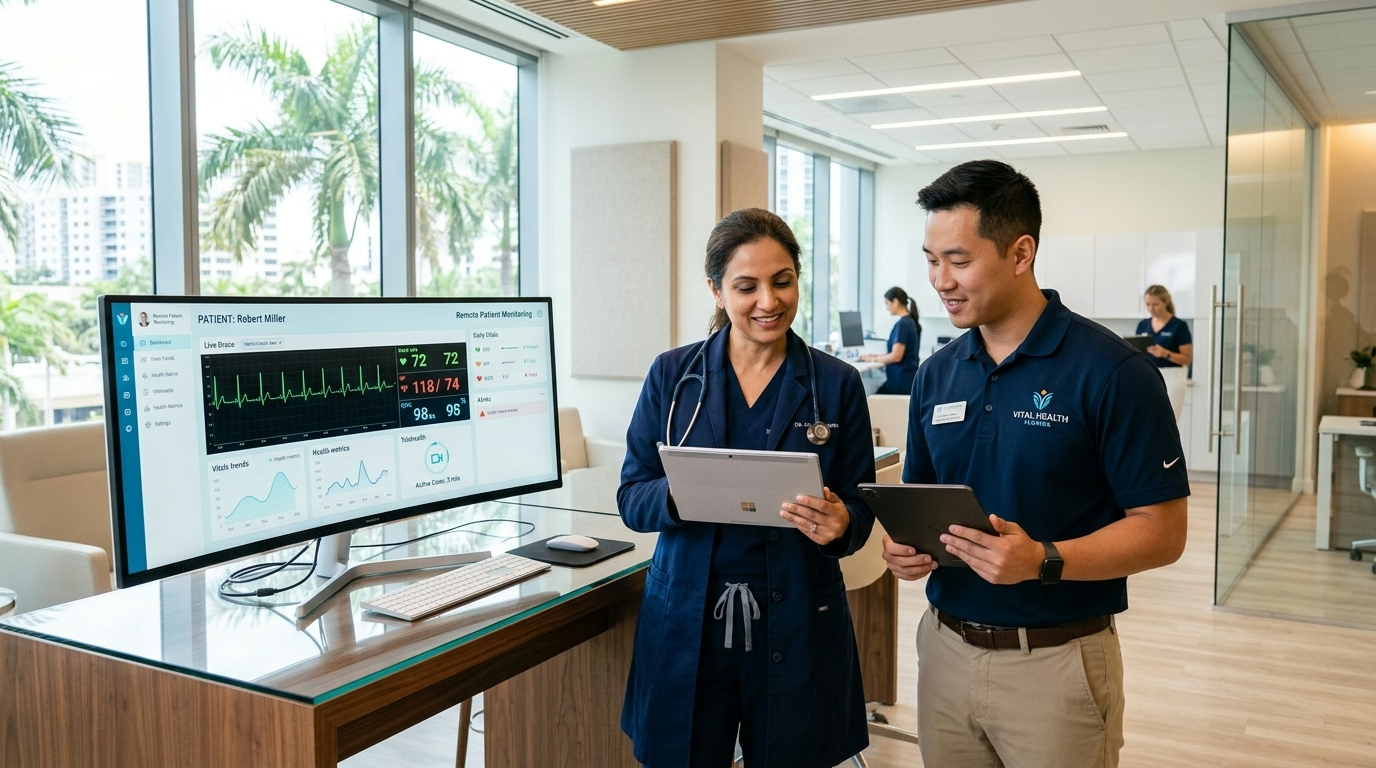
Security & HIPAA Compliance: Cloud infrastructure delivers end-to-end data encryption, automated geo-redundant backups, and multi-factor authentication that surpass legacy on-premise servers.
-
Interoperability & FHIR Standards: Cloud-native frameworks seamlessly connect EHRs, diagnostic labs, pharmacies, and billing platforms to enable real-time clinical data exchange.
-
Financial Agility & Cost Reduction: Eliminating capital hardware expenses, server maintenance, and physical storage frees practice capital for direct patient care initiatives.
-
RCM Acceleration with Shoreline: Integrating cloud billing workflows with Shoreline Medical Billing reduces denials, accelerates reimbursements, and safeguards steady practice revenue.
1. What is Cloud Computing and How Does It Work? 2. What is a Healthcare Cloud? 3. Why the Healthcare Industry is Moving Towards Cloud Computing 4. Architecture Comparison: On-Premise vs. Cloud-Native Healthcare 5. The Role of Cloud Computing in Healthcare Transformation 6. The Compelling Advantages of Cloud Computing in Healthcare 7. Top Cloud Trends in Healthcare & Medical Billing (2025–2026) 8. The Shoreline Advantage: A Partnership for the Future 9. Frequently Asked Questions
1. What is Cloud Computing and How Does It Work?
Cloud computing means delivering computing services over the internet ("the cloud"). For example, servers, storage, databases, networking, software, and analytics can be accessed through a global network rather than physical local hardware. It works by storing data in secure remote data centers and allowing authorized users to access shared resources via encrypted connections from a central provider. Think of it like renting a highly secure, virtually limitless digital warehouse for your practice data instead of bearing the costly burden of building and maintaining one on site.
2. What is a Healthcare Cloud?
A healthcare cloud is a specialized cloud computing environment designed and configured specifically to meet the stringent security, privacy, and compliance requirements of the healthcare industry, such as HIPAA and HITECH. It functions as a secure, scalable platform dedicated to storing, processing, and transmitting Protected Health Information (PHI) without exposing clinical entities to compliance liabilities.
The global healthcare cloud computing market is set to surge from $54.28B in 2024 to $197.45B by 2032, growing at an impressive 17.6% CAGR. (Source: Fortune Business Insights)
3. Why the Healthcare Industry is Moving Towards Cloud Computing
Healthcare organizations are moving rapidly towards cloud computing to manage massive volumes of structured and unstructured clinical data arising from Electronic Health Records (EHRs), high-resolution diagnostic imaging, telehealth consults, and practice billing systems. The traditional model of on-site physical servers struggles to keep pace with modern "big data" demands and lacks the elastic scalability and operational agility to manage it effectively. Cloud computing addresses these barriers through secure data storage, high availability, seamless collaboration, real-time analytics, and compliance-ready frameworks that simultaneously reduce operating overhead.
The Data Deluge: Healthcare data is projected to grow exponentially year over year. On-premise servers simply lack the physical capacity, speed, and continuous expansion capabilities required to handle this immense volume safely.
The Need for Interoperability: With the nationwide expansion of telehealth and remote patient monitoring, having secure, real-time access to patient records across disparate clinical systems has become essential. Seamless interoperability bridges communication gaps between providers, clinical specialists, payers, and patients.
Cost Efficiency: Maintaining on-premise IT infrastructure demands heavy capital investments in hardware, server rooms, climate control, cooling, and specialized full-time IT personnel. These ongoing capital expenditures are dramatically reduced under the cloud’s pay-as-you-go model, freeing valuable practice resources to invest directly in patient care.
4. Architecture Comparison: On-Premise vs. Cloud-Native Healthcare
Evaluating the architectural differences between traditional local servers and modern cloud platforms reveals distinct advantages in capital efficiency, clinical continuity, and regulatory posture:
| Operational Dimension | Traditional On-Premise Servers | Cloud-Native Healthcare Architecture | Clinical & Financial Impact |
|---|---|---|---|
| Capital & Maintenance Costs | High upfront CapEx ($15k–$40k+), recurring server room cooling, manual hardware refreshes. | Predictable OpEx subscription; zero hardware replacement or physical maintenance costs. | Cuts IT overhead by 30%–45% and eliminates sudden unexpected server failure expenses. |
| Disaster Recovery & Uptime | Single point of failure; manual tape or local NAS backups vulnerable to loss. | Automated, geo-redundant real-time replication across certified Tier-IV data centers (99.99% SLA). | Ensures zero downtime during natural disasters or local power failures. |
| Interoperability & APIs | Siloed databases; expensive custom VPN tunnels and fragile point-to-point interfaces. | Native RESTful FHIR APIs, HL7 standards, and real-time clearinghouse integrations. | Enables instant eligibility verification, EHR sharing, and rapid telehealth routing. |
| HIPAA & Cybersecurity | Local practice bears 100% of the patching, firewall, and physical perimeter security burden. | Enterprise-grade AES-256 encryption in transit/at rest, continuous threat monitoring, automated BAA. | Significantly lowers risk of costly HIPAA compliance penalties and ransomware breaches. |
5. The Role of Cloud Computing in Healthcare Transformation
Cloud solutions and predictive analytics are transforming the healthcare industry into value-based care models. Medical providers utilize cloud platforms for supporting point-of-care clinical decisions, automating claims submissions, and powering real-time patient engagement portals. For billing professionals, cloud architecture reduces claim rejections, streamlines medical coding, and optimizes practice reimbursement cycles. At Shoreline Medical Billing, we integrate certified cloud-based billing systems to ensure medical practices eliminate revenue leakage while remaining fully compliant with CMS and commercial payer rules.
6. The Compelling Advantages of Cloud Computing in Healthcare
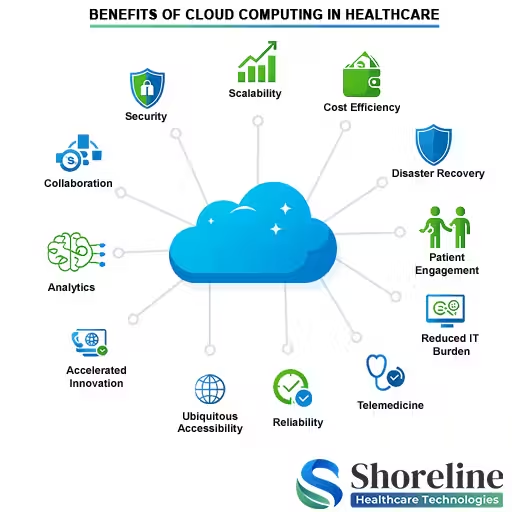
Easy Access to Patient Records
Physicians practicing across multiple healthcare facilities can instantly retrieve comprehensive patient medical histories without being tied down by local hardware limitations or on-premise network restrictions.
Fortifies Data Security
Safeguarding protected health information (PHI) remains a top priority for clinical practices. Cloud platforms incorporate military-grade encryption, multi-factor authentication, and intrusion detection to proactively prevent cyber threats and unauthorized breaches.
Scalable and Flexible
Cloud computing resources can be dynamically scaled up or down within minutes to accommodate fluctuating patient volumes, clinical practice expansions, or the introduction of new diagnostic technologies.
The Foundation for Telemedicine
From encrypted video consultations to high-bandwidth medical imaging storage and HIPAA-compliant data routing, the cloud acts as the technological backbone for modern telehealth expansion.
Cost Efficient
By shifting to certified healthcare cloud services, practices replace heavy upfront capital equipment expenditures with predictable operating costs, lowering the total cost of technology ownership.
Robust Disaster Recovery and Business Continuity
Cloud data is stored in geographically distributed, redundant data centers that perform automated real-time backups. In the event of local hardware failure or natural disasters, recovery is rapid, ensuring uninterrupted clinical operations.
Improves Collaboration and Data Sharing
The cloud provides an authorized, secure platform for multidisciplinary care teams to share vital patient information, fostering coordinated treatment planning and superior clinical outcomes.
Improves Patient Engagement
Cloud-based patient portals and mobile health applications empower patients to view test results, schedule appointments, and review billing statements securely from their personal devices.
Real-Time Data Analytics and Insights
Cloud platforms process high volumes of clinical and financial data, unlocking predictive insights that refine care protocols, eliminate operational bottlenecks, and accelerate the revenue cycle.
Reduced Burden on In-House IT Teams
Migrating to managed cloud environments relieves internal IT personnel from repetitive server maintenance, allowing them to concentrate on strategic healthcare innovations and clinician workflow support.
Accelerated Innovation
Practices gain immediate access to state-of-the-art cloud tools, machine learning models, and automated clinical software without undertaking lengthy internal software development cycles.
Guarantees High Reliability & Uptime
Enterprise healthcare cloud providers back their platforms with rigorous Service Level Agreements (SLAs), ensuring 99.99%+ availability and zero disruption to daily patient appointments and billing submissions.
7. Top Cloud Trends in Healthcare & Medical Billing (2025–2026)
- AI-Powered Cloud Infrastructure: Machine learning algorithms integrated into cloud EHRs automate clinical documentation, highlight diagnostic flags, and streamline prior authorization requests.
- Medical IoT (IoMT) Ecosystems: Wearables, continuous glucose monitors, and smart ventilators feed continuous telemetry into cloud systems for proactive disease management and remote patient monitoring.
- FHIR Standards & Interoperability: Standardized Fast Healthcare Interoperability Resources APIs connect EHRs, diagnostic labs, pharmacies, and clearinghouses for instantaneous data synchronization.
- Cloud-Based Billing Meets RPA & NLP: Billing workflows are dramatically accelerated with robotic process automation (RPA) and natural language processing (NLP) extracting accurate CPT/ICD codes directly from provider notes.
- Mobile Billing and mHealth Integration: Patients and providers manage billing workflows, copay collections, and digital payment receipts directly via encrypted mobile apps and biometric authentication.
- Advanced Predictive Analytics for Revenue Optimization: Cloud-native RCM platforms analyze denial patterns across commercial and government payers, forecasting claim risks and accelerating cash collection.
8. The Shoreline Advantage: A Partnership for the Future
As financial and administrative pressures continue to mount on healthcare practices, the true power of cloud computing is realized when paired with an expert, streamlined revenue cycle management team. This is where Shoreline Medical Billing company excels. By partnering with our certified billing specialists, your practice gains seamless access to cutting-edge cloud billing infrastructure, rigorous compliance audits, and proactive denial management designed to maximize clean claim acceptance and preserve healthy practice cash flow.
Ready to Modernize Your Practice Billing Infrastructure?
Partner with Shoreline Medical Billing to harness secure cloud technology, minimize claim rejections, and elevate practice profitability.