
-
Regulatory Foundation: Learn how to set up remote patient monitoring, follow CMS best practices, and maximize your reimbursement with Shoreline Medical Billing company.
-
How RPM Helps Providers: Implementing structured protocols for remote patient monitoring directly mitigates documentation discrepancies and streamlines claim submission.
-
Setting Up the RPM Program: Targeting operational vulnerabilities in device procurement, onboarding, and consent protects cash flow and elevates first-pass acceptance rates.
-
Revenue Cycle Acceleration: Partnering with specialized RCM billing experts eliminates administrative backlog, shortens payment cycles, and safeguards practice revenue.
The healthcare system in the US is moving towards value-based care, where providers are rewarded for delivering better outcomes, preventing complications, and reducing costs. With the increase in aging populations and rising chronic diseases, Remote Patient Monitoring (RPM) is shifting care from a reactive, episodic model to a proactive, continuous one. By using FDA-approved devices, practices monitor patients securely from the comfort of their home. In this guide, we explore how phased, strategic planning helps providers set up an RPM program that produces superior clinical outcomes, optimizes reimbursements, and establishes a scalable care delivery system.
1. How Remote Patient Monitoring Helps Providers
Remote patient monitoring (RPM) allows providers to extend clinical oversight far beyond the four walls of their physical clinic. Connected medical devices help physicians track and monitor chronic conditions like diabetes, hypertension, COPD, and congestive heart failure in real time. This continuous visibility improves patient outcomes while unlocking an essential, predictable stream of recurring practice revenue.
With CMS expanding coverage for remote patient monitoring, RPM has also become a critical financial strategy. Providers can bill Medicare and commercial payers for initial device setup, ongoing data transmissions, and clinical care management time—driving high patient engagement while establishing practice-wide financial sustainability.
2. Setting Up the RPM Program
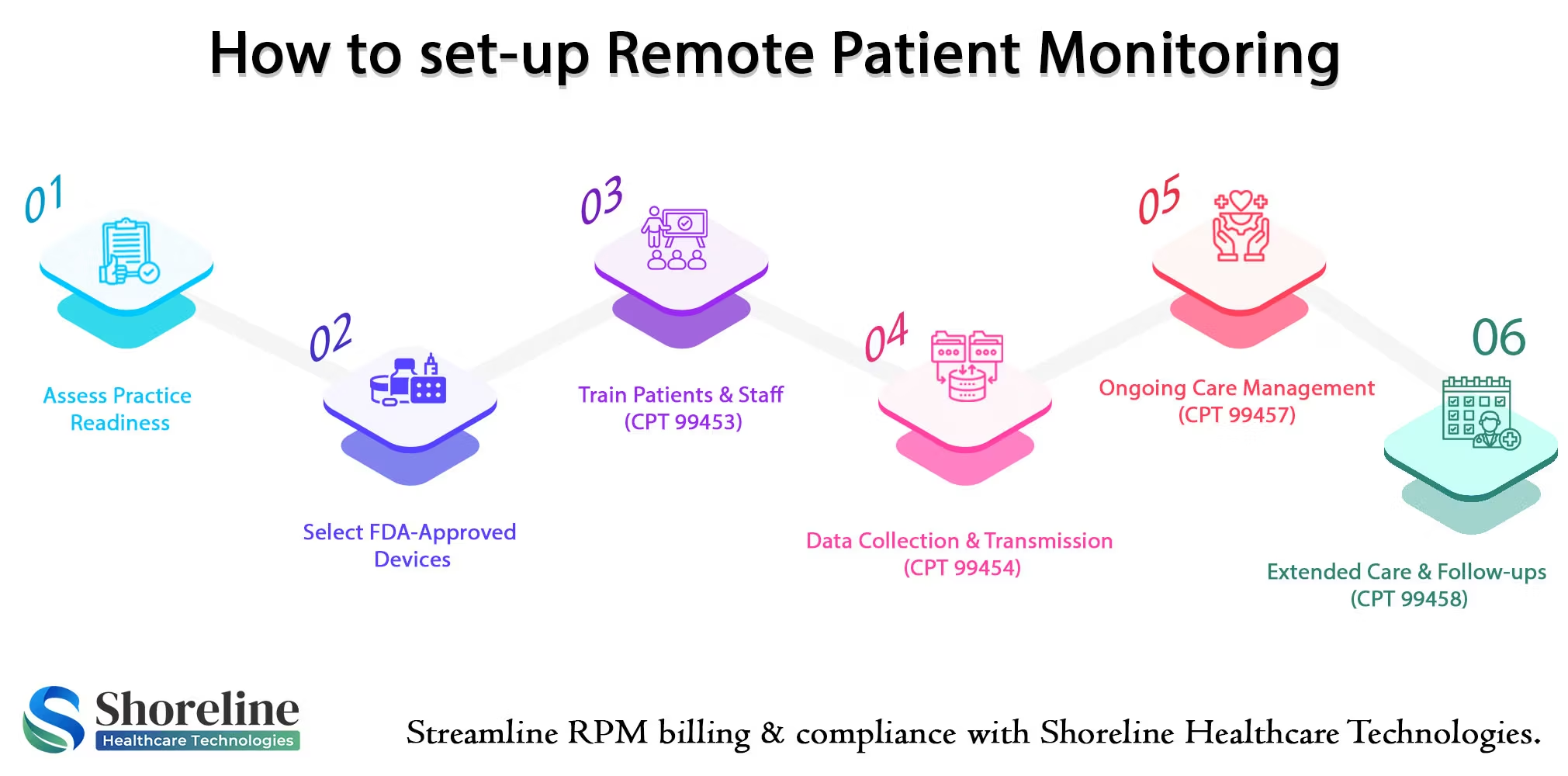
Setting up a successful remote patient monitoring program requires disciplined workflow design, staff training, and patient onboarding. It should function as a human-centered, frictionless care delivery model backed by regular performance audits.
Readiness and Strategic Planning
Before adopting an RPM platform, healthcare organizations must conduct a thorough operational and clinical readiness assessment:
-
Organizational Viability: Assess whether implementing an RPM platform is clinically viable and technically feasible given your practice's specific specialty and patient demographics.
-
Program Goals: Define clear clinical and financial milestones. Different patient cohorts and chronic disease conditions present distinct clinical, operational, and documentation requirements.
-
Identify Eligible Patients: Prioritize patients who benefit most from continuous physiological monitoring, such as individuals managing multi-comorbid conditions or post-surgical recovery. As per CMS guidelines, patients with chronic conditions meet established medical necessity criteria for RPM reimbursement. Enrolling motivated, high-risk patients ensures long-term clinical compliance and program sustainability.
Building the Right Team
A thriving RPM program requires dedicated personnel with clearly defined operational responsibilities:
-
Appoint a Multidisciplinary Team: Bring together physicians, registered nurses, medical assistants, IT specialists, and billing compliance experts to supervise device deployment and clinical data workflows.
-
Select the Right Technology Partner: Partner with end-to-end vendors capable of integrating with your Electronic Health Record (EHR), managing device logistics, cellular SIM provisioning, and patient technical support—eliminating internal IT management friction.
3. Essential System Architecture & FDA Devices
An effective RPM ecosystem requires a robust, HIPAA-compliant technological foundation, including a secure cloud infrastructure, automated vitals parsing, and real-time clinical dashboards capable of processing high-volume physiological data.
To comply with CMS billing regulations, practices must exclusively deploy FDA-cleared medical devices (such as cellular blood pressure monitors, digital weight scales, pulse oximeters, and continuous glucose monitors) that automatically transmit biometric readings without manual patient data entry.
4. Staff Training, Patient Education & Consent
Clinical Workflow Training: Train clinical staff on interpreting alert thresholds, documenting care management minutes, and following standardized escalation protocols when biometric anomalies occur.
Patient Education & 16-Day Adherence: Educate patients on device operation and emphasize CMS compliance requirements: patients must record physiological measurements on at least 16 separate days within a 30-day billing cycle to qualify for monthly RPM transmission reimbursement under CPT 99454.
Documenting Patient Consent: Prior to initiating monitoring services, obtain informed patient consent (verbal or written). Consent must be explicitly documented in the medical record by the billing practitioner and must inform the patient about potential copays, deductibles, and secondary payer responsibilities.
Managing Data, Escalations & Continuous Audits
Rapid clinical interventions and disciplined data management determine RPM success. Configure automated alert thresholds for dangerous biometric spikes, ensuring your clinical team can intervene before avoidable emergency room visits occur.
Conduct recurring billing audits to verify that cumulative clinical monitoring times (such as the initial 20 minutes required for CPT 99457 and additional 20-minute increments for CPT 99458) are documented with compliant, clinician-signed progress notes.
5. Shoreline Medical Billing: Your RPM Billing Partner
Shoreline Medical Billing company specializes in remote patient monitoring revenue cycle management. We ensure compliant documentation for device initial setup (CPT 99453), monthly data transmission (CPT 99454), and clinical management time (CPT 99457 & 99458).
Our dedicated billing specialists track patient reading frequency, prevent unbundling rejections, and verify medical necessity documentation so your practice avoids audits. Partner with our team to minimize claim denials and maximize your practice's RPM reimbursement.
Maximize Your RPM Revenue with Shoreline RCM
From device setup documentation to CPT 99453, 99454, 99457 & 99458 coding, our experts ensure compliance and full reimbursement.