

-
Comprehensive Lifecycle Assessment: An end-to-end RCM audit evaluates every operational touchpoint from patient registration to final zero-balance payment posting.
-
Preventing Silent Leakage: Revenue loss accumulates gradually through minor front-end eligibility errors, uncaptured charges, and unappealed write-offs.
-
Three-Phase Architecture: Effective audits partition the revenue cycle into Front-End (scheduling & auth), Mid-Cycle (coding & charge capture), and Back-End (claims & A/R recovery).
-
Shoreline Strategic Partnership: Partnering with Shoreline Medical Billing combines automated scrubbers, payer intelligence, and dedicated RCM specialists to eliminate denials.
1. What Is a Revenue Cycle Workflow Audit? 2. The Significance of a Workflow Audit in RCM 3. Phase 1: Front-End RCM Workflow Audit 4. Phase 2: Mid-Cycle RCM Workflow Audit 5. Phase 3: Back-End RCM Workflow Audit 6. Compliance and Risk Management 7. Best Practices for Conducting a Comprehensive Audit 8. Frequently Asked Questions
Revenue loss in healthcare doesn’t occur from a single failure, but accumulates quietly with a missed eligibility check, an incomplete physician note, or an overlooked denial eroding margins and slowing cash flow. By the time the problem is visible on a quarterly financial report, these inefficiencies have compounded into hundreds of thousands of dollars in lost revenue. These losses can be prevented with a structured audit of the revenue cycle management (RCM) workflow that traces how patient encounters move from appointment scheduling to final payment posting. In this guide, we break down the complete, end-to-end RCM workflow audit framework with practical checklists to reduce denials, shorten days in A/R, and establish clear accountability across your teams.
What Is a Revenue Cycle Workflow Audit?
A revenue cycle workflow audit is a systematic evaluation of people, processes, technology, and operational touchpoints across every stage of the healthcare billing lifecycle. Its overarching objectives are maintaining strict regulatory compliance, accelerating cash flow, eliminating revenue leakage, and ensuring sustainable practice scalability.
The Significance of a Workflow Audit in Revenue Cycle Management (RCM)
A revenue cycle workflow audit provides an objective evaluation of how efficiently and accurately an organization manages its clinical documentation, billing, and collection processes.
The primary goals include:
- Identifying hidden inefficiencies and handoff bottlenecks across administrative workflows.
- Ensuring ongoing compliance with CMS, HIPAA, and commercial payer guidelines.
- Detecting systemic billing and coding discrepancies before claims are submitted.
- Elevating first-pass claim acceptance rates to 98%+.
A well-executed audit not only restores practice financial health, but also significantly enhances the patient financial experience.
Phase 1: Front-End RCM Workflow Audit
1. Provider & Facility Setup
Every revenue cycle begins with accurate provider and facility configuration in your practice management (PM) system. Outdated or misaligned enrollment data leads to immediate hard denials.
- Active provider enrollment and revalidation with all contracted payers.
- Verification of individual and group NPIs and Taxonomy codes.
- Accurate Tax ID (TIN), legal business name, and practice ownership mapping.
- Proper location, physical address, and Place of Service (POS) mapping.
2. Appointment Scheduling Workflow
Selecting incorrect appointment types leads to downstream coding mismatches and authorization failures. Check the following details at the initial point of contact:
- Correct appointment type selected (New, Established, Procedure, Telehealth).
- Accurate rendering provider and service location assigned.
- Payer-specific referral and prior authorization requirements flagged at scheduling.
- Duplicate patient records and conflicting appointments actively prevented.
3. Patient Demographics Entry
Clean demographic data is foundational to clean claims. Demographic errors remain one of the leading causes of clearinghouse front-end rejections.
- Legal name spelling, date of birth, and gender accuracy against government ID.
- Physical address and ZIP+4 validation against postal databases.
- Guarantor details completeness for minors or dependents.
- Verified contact information for digital billing statements and reminders.
4. Insurance Capture & Coordination of Benefits (COB)
Insurance data must be accurate, complete, and properly sequenced. Incorrect primary/secondary sequencing results in automatic COB denials.
- Primary, secondary, and tertiary insurance cards scanned and captured.
- Subscriber relationship and policy ID verified.
- Medicare vs. Medicare Advantage vs. Commercial payer properly identified.
- Coordination of Benefits (COB) rules and birthday rules applied.
5. Eligibility Verification
Eligibility must be verified before every clinical visit, not just during initial registration. Coverage shifts between visits represent a major source of preventable write-offs.
- Automated real-time eligibility (RTE) checks run 48 hours before and on date of service.
- Active coverage confirmed for specific date and location of service.
- In-network vs. out-of-network provider participation status verified.
- Plan exclusions, pre-existing condition clauses, and policy terminations flagged.
6. Benefits Discovery Audit
While eligibility confirms coverage active status, benefits discovery reveals true patient financial liability.
- Deductible status (amount met vs. unmet).
- Copayment and coinsurance amounts for specific specialty services.
- Annual visit limitations and benefit maximum caps.
- Identification of service-specific prior authorization requirements.
7. Prior Authorization Management
Prior authorization failures remain a primary denial driver nationwide. Many practices obtain authorizations but fail to align them with actual CPT codes rendered.
- CPT-specific authorization requirements identified prior to appointment.
- Authorization numbers linked to specific rendering provider and date range.
- Approved units matched against planned clinical treatment.
- Authorization documentation archived and accessible to billing teams.
8. Referral Management Audit
Referrals are frequently overlooked until the claim is rejected by HMO payers.
- PCP referrals obtained and validated prior to specialty encounter.
- Referral expiration dates and authorized visit counts tracked.
- Service-specific referral rules applied and linked to the electronic claim.
9. Patient Financial Responsibility Communication
Patient out-of-pocket balances represent an increasing share of practice revenue. Transparent patient financial counseling improves point-of-service collection rates and reduces bad debt.
- Good Faith Estimates (GFE) generated and communicated prior to treatment.
- Clear explanation of patient cost-share responsibilities.
- Payment plans, credit card on file, and financial hardship assistance offered.
- Point-of-service (POS) copay and deductible collections enabled at check-in.
10. Check-In and Check-Out Workflow Audit
The day of the visit is your last operational opportunity to prevent downstream billing discrepancies.
- Insurance re-verified and physical card scanned at check-in.
- Required clinical consents and Advance Beneficiary Notices (ABN) signed.
- Point-of-service copays, past-due balances, and coinsurance collected and receipted.
Phase 2: Mid-Cycle RCM Workflow Audit
11. Encounter Creation and Charge Capture
Every clinical encounter must translate into accurate, timely billing charges. Charge capture omissions cause unrecoverable revenue leakage that never appears on denial dashboards.
- Encounter forms created for 100% of completed patient appointments.
- Accurate date of service, rendering provider, and Place of Service (POS) assigned.
- Ancillary services, lab tests, and clinical supplies fully captured.
- Time-based services documented with start and stop timestamps.
- Charge lag measured and maintained under 48 hours.
12. Charge Entry Audit
Timely charge entry prevents filing deadline issues and accelerates cash flow.
- Rapid charge entry protocols with automated schedule-to-charge reconciliation.
- Duplicate charge detection algorithms enabled in billing software.
13. Clinical Documentation Integrity (CDI)
Clinical documentation is the legal and clinical foundation for reimbursement. Incomplete or ambiguous provider notes lead to downcoding and medical necessity denials.
- Provider clinical notes finalized and signed prior to coding.
- Medical necessity clearly articulated for all diagnostic and therapeutic services.
- ICD-10 diagnosis specificity documented to the highest clinical level.
- Specialty-specific documentation guidelines strictly followed.
14. Checklist for Coding Workflow Audit
Medical coding accuracy directly determines practice revenue stability and audit compliance.
- CPT, HCPCS, and ICD-10 coding precision verified against clinical records.
- Modifier usage (e.g., -25, -59, -79) validated against NCCI edits.
- Correct Coding Initiative (CCI) bundling and unbundling rules enforced.
- Routine internal coding audits and continuing education implemented.
Phase 3: Back-End RCM Workflow Audit
15. Claim Generation and Scrubbing
Claims must be thoroughly scrubbed before submission to clearinghouses.
- Complete 837P / 837I electronic data interchange claim formatting.
- Diagnosis-to-procedure (ICD-CPT) medical necessity linkage validated.
- Prior authorization numbers and referral IDs correctly mapped to claim lines.
- Payer-specific billing rules and frequency edits applied.
16. Claim Submission Audit
Claims that are delayed or rejected at clearinghouse level often go unnoticed until filing limits expire.
- Daily electronic claim batch submissions within payer timely filing windows.
- Confirmation of 277CA clearinghouse acceptance acknowledgments.
- Immediate routing and correction of front-end clearinghouse rejections.
17. Denial Management and Root Cause Analysis
Appealing identical denial codes month after month without fixing upstream workflow errors leads to persistent revenue leakage.
- Accurate categorization of denials via CARC and RARC reason codes.
- Classification of preventable vs. non-preventable denial trends.
- Timely submission of structured, evidence-backed payer appeals.
- Upstream workflow feedback to resolve front-end and coding root causes.
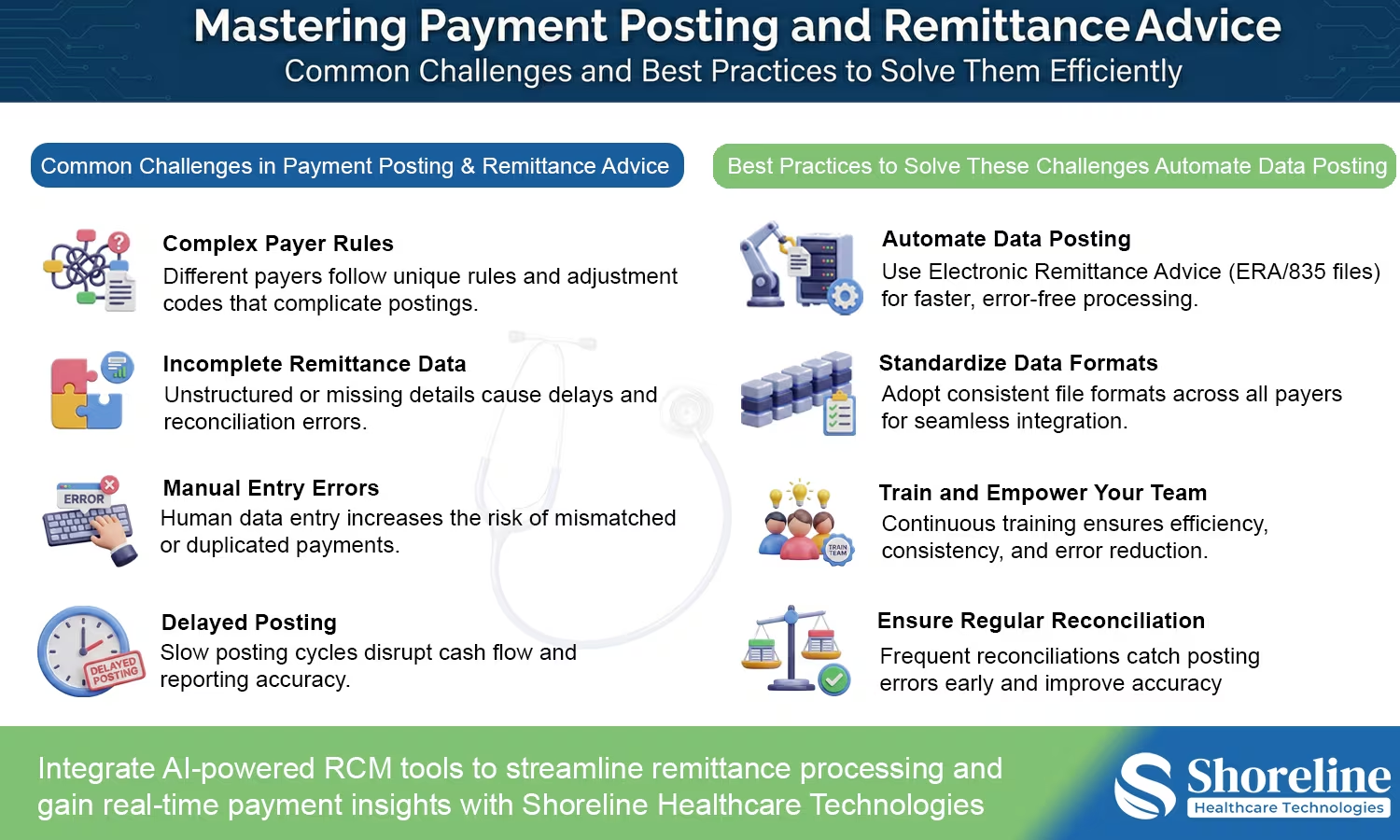
18. Payment Posting and Reconciliation
Accurate payment posting is vital for financial visibility and patient balance integrity.
- Automated Electronic Remittance Advice (835 ERA) posting and manual posting checks.
- Contractual allowable fee schedules and write-offs verified against fee schedules.
- Daily reconciliation between bank deposits and posted practice management totals.
19. Accounts Receivable (A/R) Follow-Up
Without structured A/R management, aged claims go unpaid and write-offs escalate.
- Systematic A/R aging stratification (30, 60, 90, 120+ days) by payer class.
- Structured follow-up cadence and escalation protocols for stalled claims.
- Measurement of staff resolution velocity and cash collection rates.
20. Patient Billing & Collections
Clear patient billing ensures steady cash flow while maintaining patient satisfaction.
- Clear, itemized patient statements issued promptly after insurance adjudication.
- Multiple online payment channels, text-to-pay, and patient portal access.
- Bad-debt write-offs managed strictly in compliance with practice policy.
Using Analytics in Workflow Audits
Real-time RCM analytics empower healthcare leaders to make data-driven decisions. A workflow audit should continuously benchmark key performance indicators (KPIs):
- Days in Accounts Receivable (DAR) – Target: < 35 days.
- Clean Claim Rate (CCR) – Target: > 95%.
- Net Collection Rate (NCR) – Target: > 96%.
- First-Pass Denial Rate – Target: < 5%.
- Cost to Collect – Target: < 4% of total collections.
Compliance and Risk Management
Every RCM workflow audit must verify alignment with federal and state regulations including HIPAA, CMS Conditions of Participation, and OIG compliance guidelines. Routine internal audits and staff training eliminate external audit exposure and protect your practice reputation.
Best Practices for Conducting a Comprehensive Audit
- Perform internal audits across all revenue cycle phases on a quarterly schedule.
- Assemble a cross-functional audit committee spanning administration, clinical leadership, and coding.
- Leverage RPA and AI automation to eliminate repetitive manual verification steps.
- Document all audit findings and assign accountable owners for corrective action plans.
- Establish transparent executive dashboards to monitor ongoing performance improvements.
Partner with Shoreline Medical Billing to evaluate your practice workflows across the revenue cycle. We combine deep payer intelligence, certified coding experts, and advanced technology to build a resilient, high-performing revenue cycle.
Optimize Your Practice Revenue Cycle Today
Partner with Shoreline Medical Billing to conduct a comprehensive workflow audit, eliminate claim rejections, and maximize practice cash flow.