

-
Foundation of Sustainable Billing: Accurate documentation is the bedrock of clean claim submissions, mitigating audit risks and preserving practice cash flow.
-
CERT Program Compliance: CMS uses Comprehensive Error Rate Testing to evaluate claim justification; complete, legible notes protect against post-payment clawbacks.
-
Demonstrating Medical Necessity: Every diagnostic test, procedure, and clinical service must be chronologically detailed and justified by the documented patient condition.
-
EHR & Billing Integration: Modern EHR templates with standardized prompts and speech-to-text tools reduce clinical documentation error rates by over 40%.
1. Foundation of Medical Records 2. Why CMS Guidance Matters 3. Accurate Documentation Essentials 4. CMS Requirements & CERT Program 5. Guidelines for Documenting Medical Services 6. Insufficient Documentation Errors 7. How Technology Improves Records 8. Implementing an Effective Documentation Process 9. Frequently Asked Questions
Maintaining correct medical documentation is the foundation for sustainable billing and delivering high-quality patient care. Insufficient documentation can lead to claims being rejected or denied, increases audit exposure, and may even result in costly compliance investigations. To assist clinicians, the Centers for Medicare & Medicaid Services (CMS) provides comprehensive guidance to help healthcare providers navigate medical record-keeping with clarity and confidence.
In this article, we explore the essential principles of medical record documentation, CMS compliance mandates, and how partnering with Shoreline Medical Billing empowers healthcare practices to maintain reliable, complete, and audit-proof clinical documentation.
Why does CMS Guidance on Documentation Matter?
CMS establishes the definitive regulatory framework governing how physicians record and maintain patient encounters. Compliance is critical for securing appropriate reimbursement and adhering to federal and state healthcare statutes. CMS documentation checks confirm that all services billed to Medicare and Medicaid are medically necessary, accurately coded, chronologically recorded, and substantiated by the patient’s clinical chart.
Accurate Documentation is Essential For:
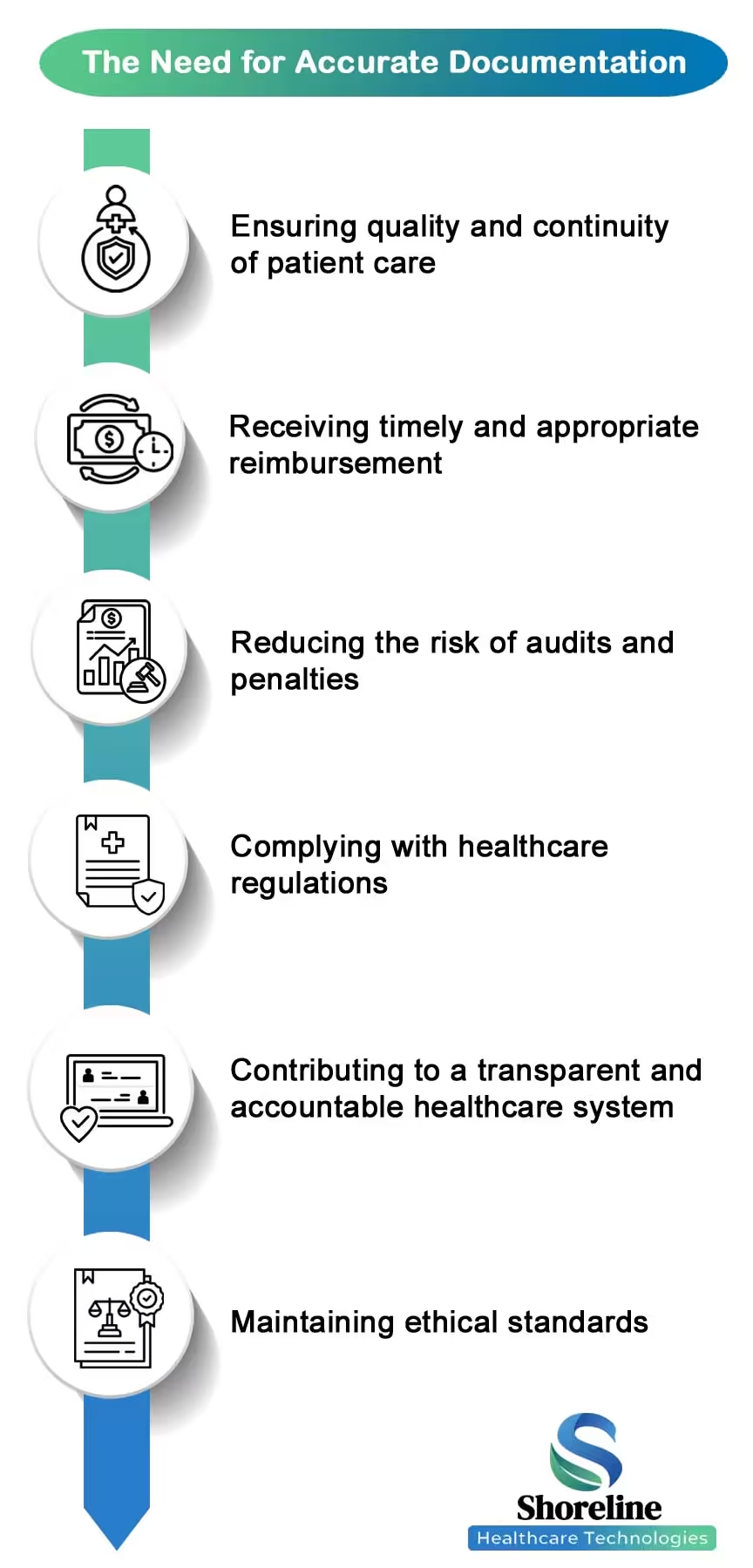
- Quality & Continuity of Care: Ensuring accurate information handover across care teams and subsequent patient encounters.
- Timely Reimbursement: Accelerating clean claim processing without documentation-related payment delays.
- Audit Mitigation: Reducing the risk of CERT reviews, RAC audits, and post-payment clawbacks.
- Regulatory Compliance: Adhering to federal Medicare Conditions of Participation and HIPAA standards.
- Transparency & Accountability: Contributing to an ethical, traceable healthcare billing environment.
- Ethical Standards: Safeguarding patient trust and maintaining professional medical ethics.
Overview of CMS Documentation Requirements
CMS utilizes the Comprehensive Error Rate Testing (CERT) program to systematically audit Medicare Fee-for-Service (FFS) claims. CERT verifies whether submitted clinical charts fully justify the specific CPT codes billed. Providers must furnish complete, legible, and timely documentation, including notes from referring physicians or diagnostic testing facilities upon request. Failure to provide complete records results in payment recoupments and elevated audit risk.
What are the CMS Guidelines for Documenting Medical Services?
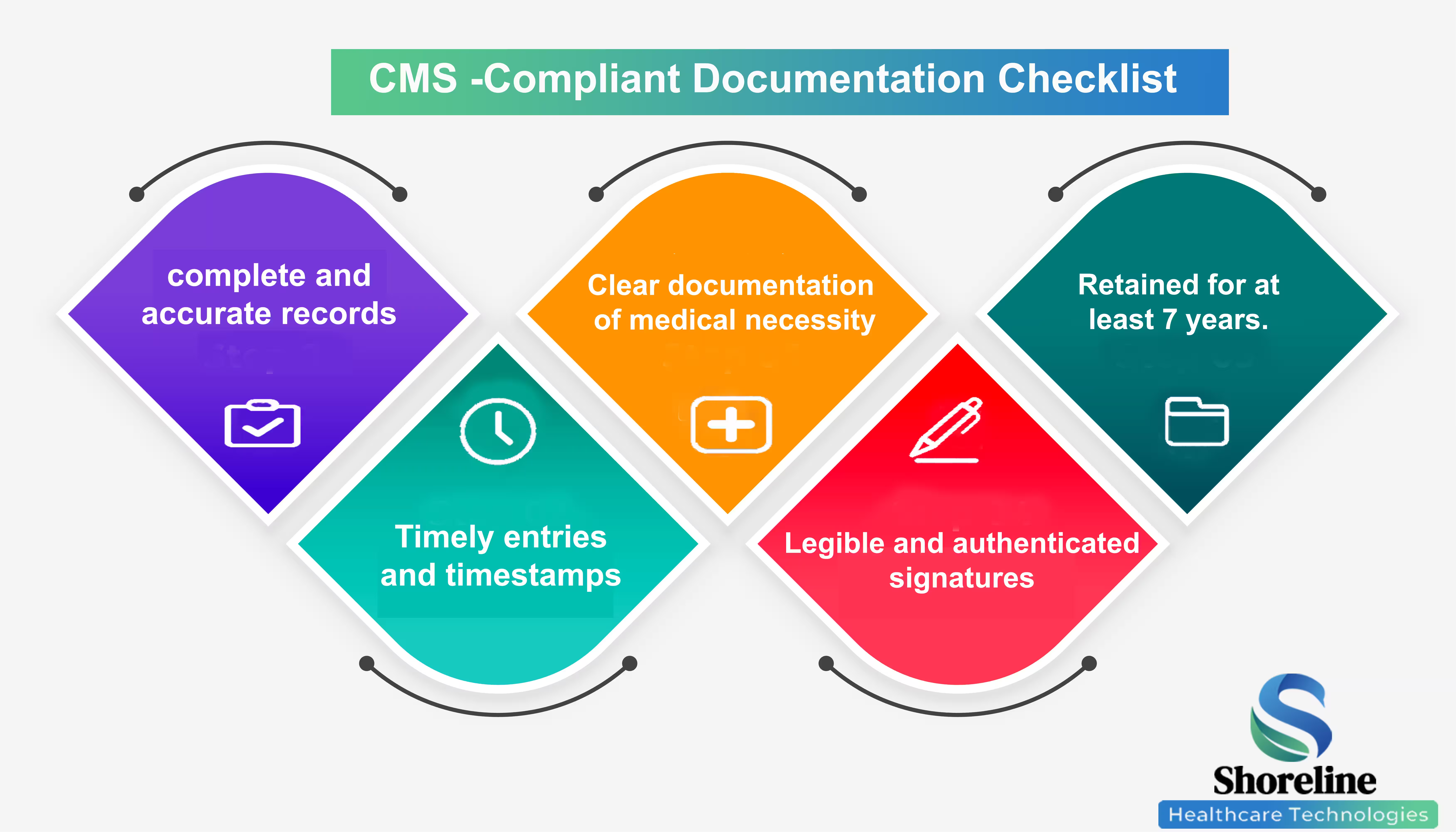
To comply with CMS mandates, clinical records must be thorough, legible, authenticated, and clearly substantiate that all billed services were rendered and medically necessary.
Medical Necessity
Documentation must establish that services rendered are medically reasonable and necessary based on the patient’s documented clinical presentation. Every test, prescription, and procedure must have a clear diagnostic justification.
Chronological and Detailed Notes
Record all services in a logical, date-stamped manner. Document complete clinical details including chief complaint, history of present illness (HPI), physical examination findings, diagnostic test results, and medical decision-making (MDM).
Legibility and Authentication
All clinical entries must be clearly legible and authenticated with the provider’s signature, credentials, date, and timestamp.
Specificity and Clarity
Avoid ambiguous abbreviations or vague phrases like “status unchanged” or “patient doing well.” Use precise clinical terminology that clearly reflects the complexity and severity of the encounter.
Timely Documentation
Clinical encounters must be documented concurrently at the time of service or immediately thereafter. Any late entries or addenda must be distinctly labeled, dated, and signed.
What Causes Insufficient Documentation Errors?
Incomplete progress notes lacking clinical detail, missing physician signatures, absence of signed physician orders, undocumented medical intent, and copy-paste charting errors are primary triggers for CERT audit failures and claim rejections.
How Technology Contributes to Better Medical Documentation
Certified Electronic Health Record (EHR) platforms enhance documentation precision through standardized clinical templates, built-in coding validation, required field prompts, and AI-driven speech-to-text dictation.
At Shoreline Medical Billing, we integrate cutting-edge billing software with leading EHR systems to optimize documentation workflows and eliminate revenue loss.
Implementing an Effective Medical Documentation Process
Establishing an audit-resistant documentation protocol requires a multi-faceted approach:
- Standardized Policies & Procedures: Define internal documentation protocols strictly aligned with CMS guidelines.
- Continuous Staff Training: Conduct regular education for clinical and administrative staff on updated CPT/ICD coding and payer documentation rules.
- Routine Internal Audits: Perform proactive chart audits to identify documentation gaps before claims are submitted.
- EHR Optimization: Configure EHR clinical templates to prompt physicians for required MDM elements and medical necessity specifics.
- Payer Rule Monitoring: Continually track updates in CMS documentation directives and commercial payer coverage policies.
- Provider Documentation Coaching: Train clinicians on documenting the complexity of care to substantiate appropriate Evaluation and Management (E/M) levels.
Navigating CMS documentation guidelines is essential for maintaining a healthy revenue cycle. Partnering with Shoreline Medical Billing transforms your documentation workflow from a compliance risk into a strategic practice advantage.
Elevate Your Documentation & Prevent Audits
Partner with Shoreline's certified coding auditors to ensure your clinical records satisfy CMS requirements, accelerate Medicare reimbursement, and guarantee compliance.