
Executive Key Takeaways
Shifting from reactive denial management to proactive AI denial prevention stops revenue leakage before claim transmission. Over 65% of denied claims are never reworked; automated scrubbers and predictive algorithms drastically increase first-pass clean claim rates. Combining machine learning pattern detection with certified AAPC billing specialists delivers sustained cash-flow acceleration.
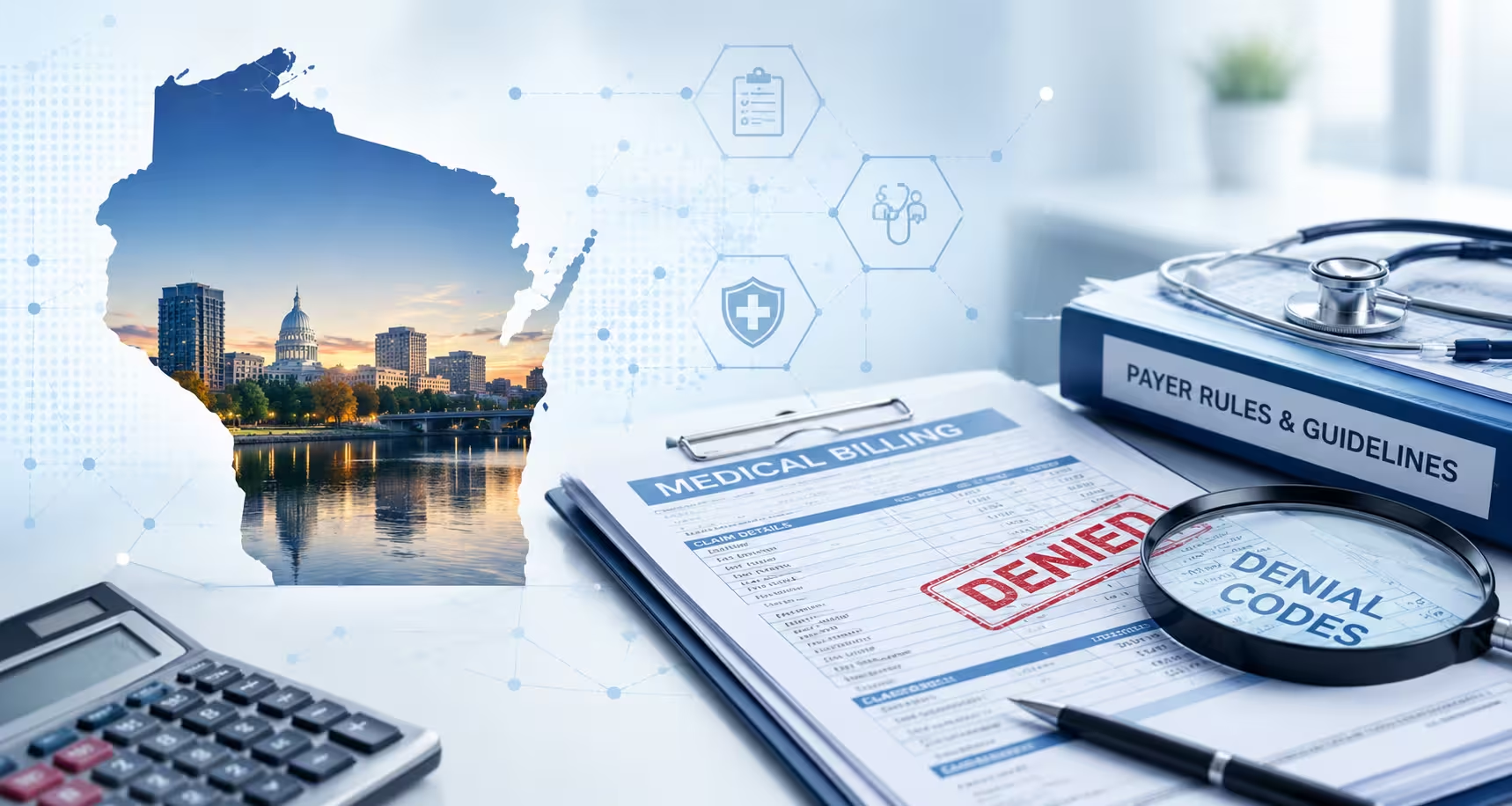
Industry data shows that about 15% to 20% of medical claims are being denied on their first submission, with nearly 65% of those denied claims being never reworked resulting in significant revenue loss for the providers. Claim denials continue to be one of the biggest revenue challenges for healthcare providers. And these findings have been consistently highlighted in reports from the American Medical Association and Medical Group Management Association.
Healthcare organizations should move from the reactive denial management strategies and start adopting the AI-powered denial prevention techniques to stop the revenue leakage before it happens. In this blog let us explore how artificial intelligence is transforming denial prevention and how providers can leverage it to improve their financial performance.
What is Denial Prevention in Medical Billing?
Denial prevention refers to the process of identifying and correcting the potential errors in the medical claims before submission. This helps to ensure that the claims submitted are clean and complaint and are accepted on the first pass.
Why the traditional Denial Management is no longer enough?
From decades, healthcare organizations have been relying on the manual workflows to manage their denials. These processes typically include manual claim review, post-submission corrections and appeals processing. While these methods may recover some revenue, they are inherently inefficient.
The Key Limitations include
According to the American Hospital Association, administrative complexity remains one of the top cost drivers in healthcare and denial-related workflow is the major contributor for it.
How Artificial Intelligence is Transforming Denial Prevention in Medical Billing
Artificial intelligence is transforming the way healthcare organizations are approaching their revenue cycle management. Instead of reacting to the denied claims, AI enables providers to predict, prevent and optimize their workflow well in advance.
1. Predictive Analytics for Denial Prevention
With AI-powered tool organizations can now examine the large volumes of historical claims data to detect patterns associated with denials. It can identify the trends in payer-specific denials, frequently rejected CPT codes, or modifiers mismatches that would have led to claims being rejections. By flagging these high-risk claims before submission, it helps providers to take the necessary corrective action well in advance thereby improving the first-pass acceptance rates and reducing the need for reworks.
2. Intelligent Claim Scrubbing and Validation
With the latest AI-driven claim scrubbing tools we can perform real-time validation of the claims submitted. These systems check for coding accuracy, completeness of the documentation and payer-specific billing rules. They ensure to check whether all the claims meet compliance requirements before each submission, which significantly increases the rate of clean claims and minimizes the costly errors.
3. Automated Eligibility Verification
One of the most common causes for claim denials is the eligibility-related errors. By using AI providers can automate the process of eligibility verification in real-time. They help to confirm the patient’s active coverage, details of benefits and authorization requirements before services are rendered. So that most of the front-end errors is reduced and ensures to have a smoother claim processing while improving the reimbursement timelines.
4. Natural Language Processing (NLP) for Coding Accuracy
AI-powered NLP tools evaluate the clinical notes and align them with the appropriate billing codes. They bridge the gap between provider notes and coding requirements and enhances the coding accuracy and compliance. They help to reduce the occurrence of under coding, over coding, or documentation-related denials before the claims are submitted.
5. Continuous Learning and Adaptive Intelligence
Artificial Intelligence continuously evolves themselves by learning from the past denials, payer behavior and regulatory updates. With this adaptive intelligence healthcare organizations can stay ahead of the changing payer requirements and industry regulations.
Measurable Benefits of AI-Powered Denial Prevention at Shoreline Medical Billing company
We at Shoreline Medical Billing company have integrated these AI-driven capabilities in our daily workflow enabling healthcare providers to transit toward a more efficient, scalable and predictive revenue cycle management that ultimately reduces denials and maximizes the revenue outcomes.
Significant Reduction in Denial Rates
With our advanced predictive analytics and intelligent claim validation, we helped providers to identify potential errors before each claim submission, resulting in a 30–40% reduction in claim denials and 96% of first-pass acceptance rate.
Accelerated Reimbursements
By ensuring cleaner claims and minimizing rework, Shoreline enables faster payer processing, leading to shorter reimbursement cycles and improved cash flow velocity.
Reduced Administrative Burden
Our automation-driven workflows reduce the need for manual intervention, allowing healthcare teams to focus on patient care rather than billing corrections ultimately lowering their operational costs.
Improved Cash Flow Visibility
This real-time reporting and data-driven insights, helps providers to gain better control over their revenue cycle, and have a more predictable and consistent revenue streams.
Enhanced Coding Accuracy and Compliance
By leveraging AI-powered validation and continuous monitoring, we minimize coding errors and ensure adherence to payer guidelines reducing the risks of audit and improving the overall compliance.
As healthcare landscape becomes more complex, relying on manual, reactive processes for denial management is no longer sustainable. AI-powered denial prevention offers a smarter, faster and more efficient way to protect your revenue and improve your financial performance.