
What is Cloud Computing in Healthcare?
Cloud computing in healthcare means storing and managing the patient data using remote servers over the internet. Electronic health records (EHRs), billing systems, imaging tools, and patient portals can be integrated together so that all data can be accessible in real time from across various systems. It also adheres to all compliances like HIPAA and other Federal and State regulations protecting the privacy of the patient’s information.
Why is Easy Access to Patient Records Important?
Easy access to patient records can reduce costs and improves patient satisfaction by preventing redundant tests and delays, it improves the entire healthcare system. Doctors can make quick decisions by viewing the medical history, test results, and images. Nurses and support staff can have better-coordinated workflows and helping them to reduce errors in care. Accessing their medical records through portals helps patients to be more active in their own healthcare journey. It is vital in emergency situations where providers can make decisions instantly.
How Does Cloud Computing Enable Easy Access?
All patient records are stored and maintained under a single, secure hub making it available at all time from anywhere.
1. Centralized Data Storage
Instead of scattering records across departments and facilities, cloud solutions keep everything in one secure hub.
2. Device and Location Flexibility
Authorized users can log in from any location and can use any number of devices via a secure network.
3. Interoperability with EHR Systems
It allows data exchange across different systems, so providers, billing companies and payers can have smooth flow of data. The ONC, in collaboration with the CDC’s National Center for Health Statistics, found that almost nine out of ten office-based physicians (89.9%) are using the cloud based EHR system in their practice.
4. Round-the-Clock Availability
Cloud systems are available 24/7 and have automated backups and recovery mechanism.
Benefits of Cloud Computing for Healthcare Providers and Patients
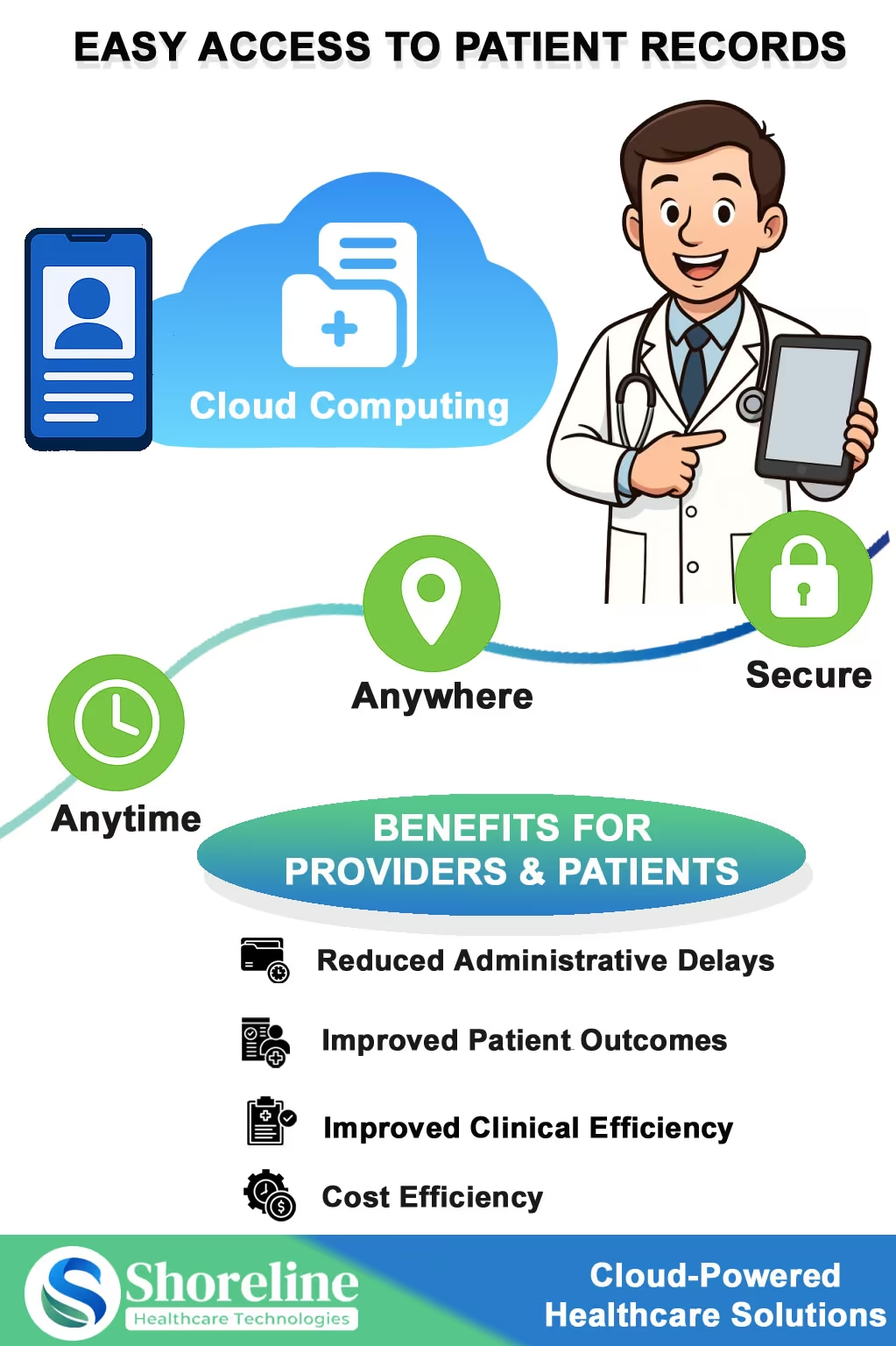
The benefits of moving patient information to the cloud are huge, impacting everything from daily operations to patient outcomes.
For Healthcare Providers:
- Cost Savings: No need to buy, maintain, or update expensive physical servers and hardware. Providers only pay for the storage and services they use.
- Scalability: They can quickly adapt with the growing practices or requirement for more storage with less downtime.
- Better Collaboration: Providers can easily share information and helps to improve medical decision making.
- Disaster Recovery: All cloud solutions are stored over the internet and all data are backed up automatically so that we can retrieve data easily after any disruptions.
For Patients:
- Convenient Access: Patients can easily access their medical records and information on their treatment plans. This transparency helps to boost satisfaction and confidence on their physician.
- Improved Care: Doctors can provide much personalized care as they have an up-to-date access to a patient’s medical history.
- Telemedicine: Cloud acts as a backbone for telehealth services by providing secure video consults, so patient can get professional care from the ease of their home.
The Challenges and Best Practices
While there many benefits on moving to cloud-based environment, there still exists some challenges:
-
Security and Privacy: Always the biggest concern in healthcare Industry because violations in protecting patient data can lead to legal consequences. There is always the risk of data breach and cyberattacks.
-
Regulatory Compliance: Can be complex with all federal and state-specific laws like HIPAA.
-
Integrating: Transitioning from legacy systems and switching to cloud technology can be technically demanding.
What Are the Best Practices to Be Followed for Adopting a Cloud Environment?
Physicians can have a smooth transition to a cloud-based environment with a clear planning and picking up the right cloud provider who adheres to maintain data security and compliance with HIPAA.
-
Choose the Right Partner: Partner with vendors who specialize in healthcare and maintain a proven track record of strict HIPAA compliance.
-
Plan Carefully: Start with less critical data and test everything thoroughly before moving live patient records.
-
Train Your Staff: Educate clinical and administrative staff on cloud computing protocols and maintaining patient confidentiality.
-
Use a Phased Approach: Move your data and systems in small, manageable milestones to prevent operational bottlenecks.
Why Partner with Shoreline Medical Billing Company?
We at Shoreline Medical Billing company, guide healthcare providers through the complexities of cloud adoption. We help you to have a secure migration and compliance checks by providing training to your staffs and ongoing support, we see to that your organization maximizes the benefits of cloud computing in healthcare. By outsourcing your billing challenges to Shoreline, providers can:
-
Reduce operational costs and infrastructure risks.
-
Ensure compliance with HIPAA and CMS regulations.
-
Focus on delivering exceptional patient care.
Cloud computing is redefining the way of handling healthcare data making it available at all time and everywhere. This shift not only improves care quality but also empower physicians and patients, reduce operational costs, and streamline workflows. Adopting cloud-enabled record systems is becoming a strategic move for the survival and growth of a practice. We at Shoreline Medical Billing company, help you to have a smooth transition, robust compliance, and set your practice up for long-term success.